The core difference
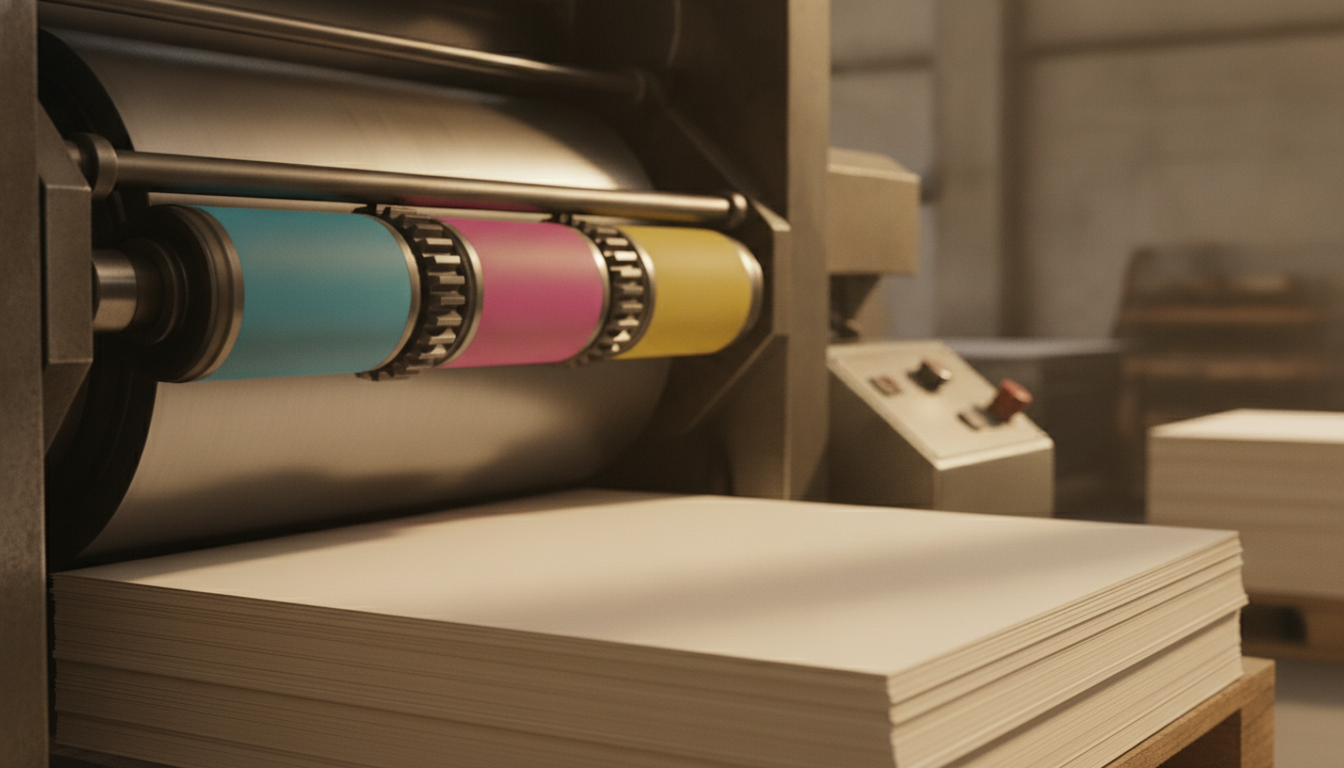
Offset printing transfers an image from a metal plate to a rubber blanket, then onto the paper. Each colour gets a plate, and the plates must be made and aligned before the run starts. Digital printing has no plates — the file goes straight from the computer to the press, like a very large, very accurate office printer.
Side-by-side comparison
| Digital | Offset | |
|---|---|---|
| Setup cost | None or minimal | Plates and make-ready per job |
| Best quantity | 1 to ~500 | 500 to lakhs |
| Per-piece cost at low qty | Lower | Higher |
| Per-piece cost at high qty | Higher | Much lower |
| Turnaround | Same day to a few days | Several days |
| Variable data | Yes — every piece can differ | No — all identical |
| Colour accuracy | Very good | Excellent, repeatable run to run |
| Paper options | Limited to press-compatible stock | Very wide |
When digital printing wins
- Short runs: visiting cards, a hundred flyers, a single poster, sample proofs.
- Deadlines: same-day and next-day jobs are only possible without plate making.
- Variable data: numbered tickets, personalised name badges, address-variable mailers.
- Testing: print 50 of a design first, correct the file, then commit to 5,000.
When offset printing wins
- Large runs: catalogues, newspapers, packaging, thousands of identical leaflets.
- Specialty work: Pantone spot colours, metallic inks, varnishes and complex finishes.
- Exact brand matching: once plates are made, the 5,000th sheet matches the first.
- Thin or unusual stocks that a digital press cannot handle.
Where is the crossover?
As a working rule, digital is cheaper up to roughly 300–500 pieces for a standard job, and offset takes over above that. The line moves with the number of colours and the paper: a one-colour job crosses over sooner, a four-colour job with heavy finishing crosses over later. A 500 GSM laminated card with foil may stay with digital regardless, because finishing — not printing — dominates the cost.
Quality: is one visibly better?
At normal reading distance, modern digital output is hard to tell from offset on ordinary jobs. Differences appear at close inspection — offset holds finer detail in flat tints, reproduces brand colours more consistently across a long run, and can use Pantone inks that digital cannot. For photographs on coated paper, high-end digital is effectively equal for short runs.
What this means when you order online
Online printing platforms run digital presses for most catalogue products because orders are small, personalised and deadline-driven — your file, your quantity, your address. When an order is genuinely large, it moves to offset for a lower unit price. Either way, you get the price before you upload and a proof you approve before printing starts. See how it works on the product catalogue.
Frequently asked questions
Which is cheaper for small quantities?
Digital. There are no plates or make-ready charges, so a run of 50 or 200 costs far less than offset, which must absorb plate-making across the whole run.
At what quantity does offset become cheaper?
Roughly 300–500 pieces for a standard job, though it varies with colour count, paper and finishing. Beyond a few thousand, offset is almost always cheaper per piece.
Is offset print quality better than digital?
Offset gives more consistent colour over very long runs and supports Pantone spot colours and specialty finishes. For short runs, modern digital output is comparable to the eye.
Can digital printing handle different details on each copy?
Yes — that is variable data printing. Names, numbers, barcodes and addresses can change on every piece without extra setup cost.
Which is faster?
Digital, by a wide margin. Without plates, most digital jobs can start immediately and finish the same day, while offset needs plate making and make-ready first.