Standard visiting card size in India
The standard business card size in India is 3.5 × 2 inches (89 × 51 mm), which is what almost every card holder, visiting card stand and wallet slot is built for. Square cards and rounded-corner cards look distinctive, but they fit standard holders poorly — pick them only if you hand cards out in person rather than leave them on a desk.
Which paper thickness (GSM) should you choose?
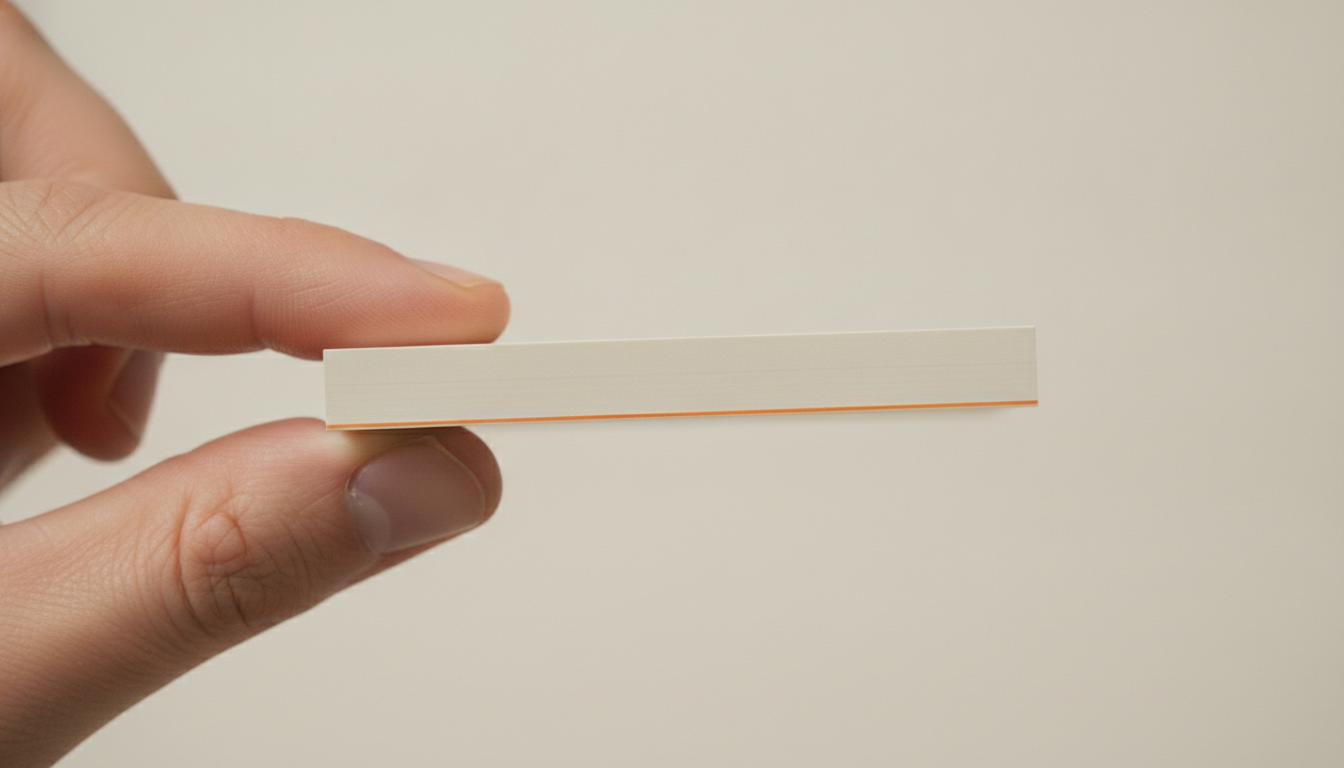
GSM stands for grams per square metre — it is how thick and stiff the card feels. Thickness is the single biggest thing people notice when they touch your card.
| GSM | How it feels | Best for |
|---|---|---|
| 250 GSM | Light, flexible, slightly see-through when printed dark on both sides | Short runs, handbills, temporary cards |
| 300 GSM | Firm and professional — the usual default | Everyday business cards for most businesses |
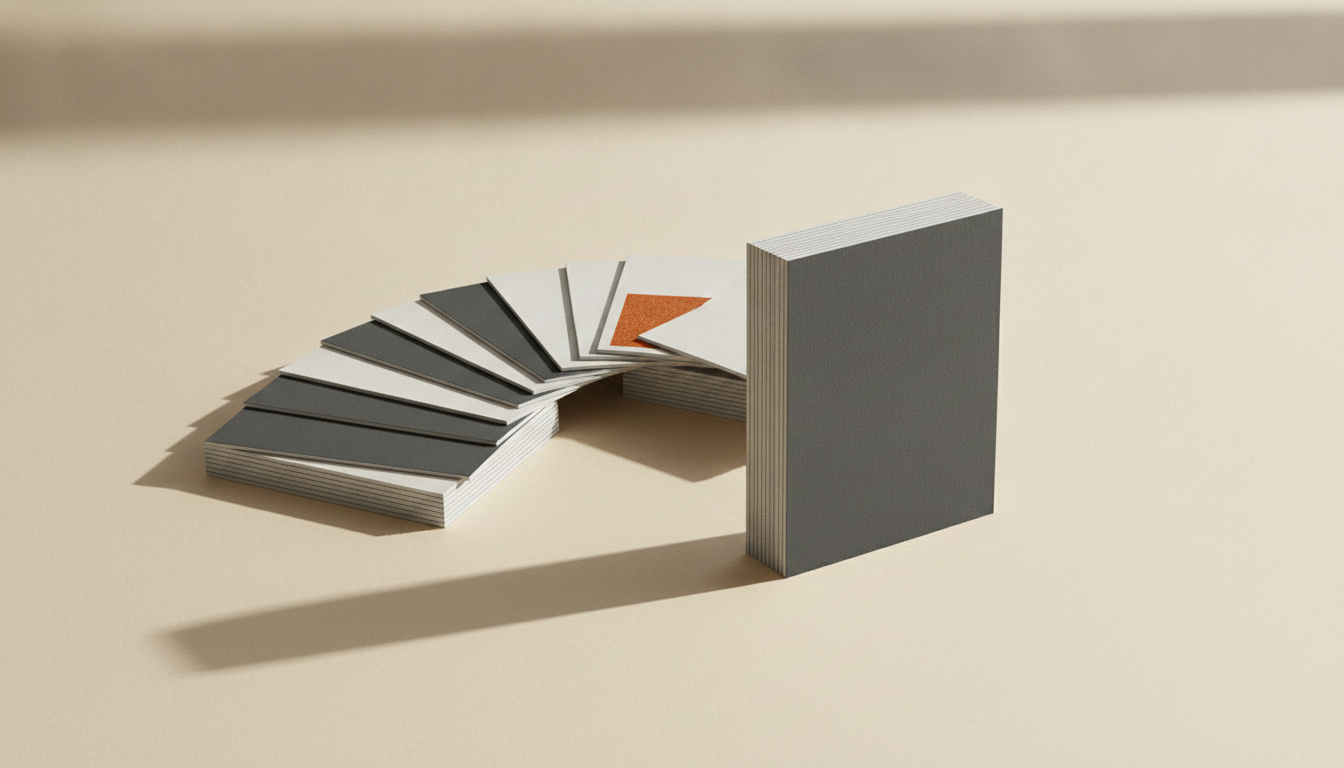
| 350 GSM | Heavy and premium, no show-through | Clinics, agencies, premium brands, double-sided dark designs |
| 400 GSM+ | Very thick, almost like a small board | Luxury cards with foil or spot UV |
Single side or double side?
Single-sided cards are cheaper and are fine when the back is blank. Double-sided cards are worth it when you want a logo on the back, a map, a WhatsApp QR code, a GST note or a list of services. If you print double-sided, keep critical text at least 3 mm away from the trim edge.
Finish options explained
- Matte lamination — soft, non-reflective, fingerprints show less. The safest choice for a professional look.
- Gloss lamination — shiny, colours look brighter and photos pop, but glare makes small text harder to read.
- Spot UV — a raised glossy layer on top of matte, usually on the logo. A noticeable premium touch.
- Foil stamping — metallic gold, silver or copper on a name or logo.
- Rounded corners — stops corners fraying in a wallet; a small change that lasts longer.
How many cards should you order?
Per-card price drops sharply as quantity rises, but a card that is outdated costs more than the printing. Most Patna businesses reorder at 200–500 pieces. Order 100 if you are testing a new design or a new brand name, 500 if your details rarely change, and 1000 only if you hand out cards daily or have a sales team.
Typical visiting card rates in Patna
Local press rates move with paper cost, quantity and finish. Indicative market ranges for standard 3.5 × 2 inch cards in Patna:
| Quantity | 300 GSM (approx.) | 350 GSM + matte (approx.) |
|---|---|---|
| 100 cards | ₹200 – ₹450 | ₹350 – ₹700 |
| 500 cards | ₹500 – ₹1,000 | ₹800 – ₹1,600 |
| 1,000 cards | ₹700 – ₹1,500 | ₹1,200 – ₹2,500 |
| Premium (foil / spot UV) | — | ₹2.50 – ₹6 per card |
How to order visiting cards online
- Choose the paper and finish, then select quantity — the price updates before you pay.
- Upload a print-ready PDF, or start from a template and edit your details online.
- Check the digital preview carefully: phone numbers, spellings and the GST number.
- Approve the proof. Nothing goes to press until you approve it.
- Get the cards delivered to your address in Patna, or ship anywhere in India.
Delivery across Patna
Doorstep delivery covers the main city areas — Boring Road, Exhibition Road, Patna Junction, Kankarbagh, Bailey Road, Rajendra Nagar, Patliputra Colony, Gandhi Maidan, Ashiana, Khajpura, Saguna More and Danapur — plus the wider Bihar region by courier. Turnaround depends on the finish: standard matte cards are usually quickest, while foil and spot UV add a day or two.
Frequently asked questions
What is the standard size of a visiting card in India?
3.5 × 2 inches (89 × 51 mm). It fits standard card holders and wallets, so avoid unusual sizes unless you specifically want something different.
Is 300 GSM or 350 GSM better for a business card?
300 GSM is the everyday default and costs less. 350 GSM feels noticeably heavier, never shows the reverse side through the paper, and is the better choice for dark full-bleed designs and premium brands.
How much does visiting card printing cost in Patna?
Indicative local market rates are roughly ₹200–₹450 for 100 standard 300 GSM cards and ₹700–₹1,500 for 1,000. Premium finishes such as foil or spot UV cost more per card. PrintListo shows the exact live price before you upload your design.
Can I get visiting cards printed the same day in Patna?
Same-day or next-day is possible for standard digital jobs on normal paper. Laminated, foiled and spot-UV cards take longer because of the finishing step. Confirm the turnaround before you approve the proof.
Do you print both sides of a visiting card?
Yes. Double-sided printing is the better choice when you want a logo or QR code on one side and details on the other. Keep text at least 3 mm from the edge so nothing is trimmed off.